
Retirement community, assisted living, nursing home: three different places for three different needs
They are not three names for the same thing. Here is what each one offers, how much care is in the building, and who pays.
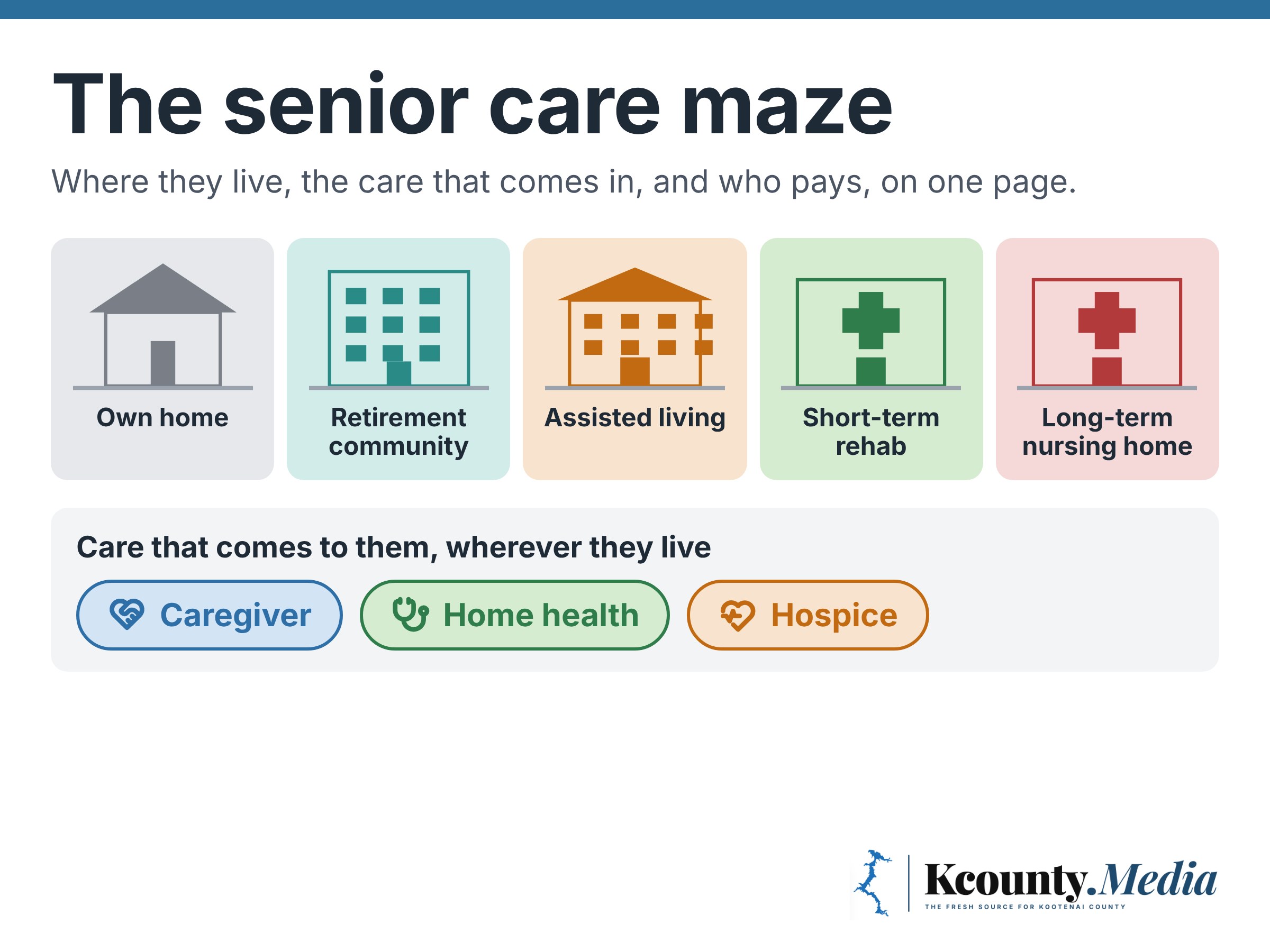
When a parent can no longer live alone, families often start calling places without knowing which kind of place they need. Retirement communities, assisted living and nursing homes each serve a different purpose.
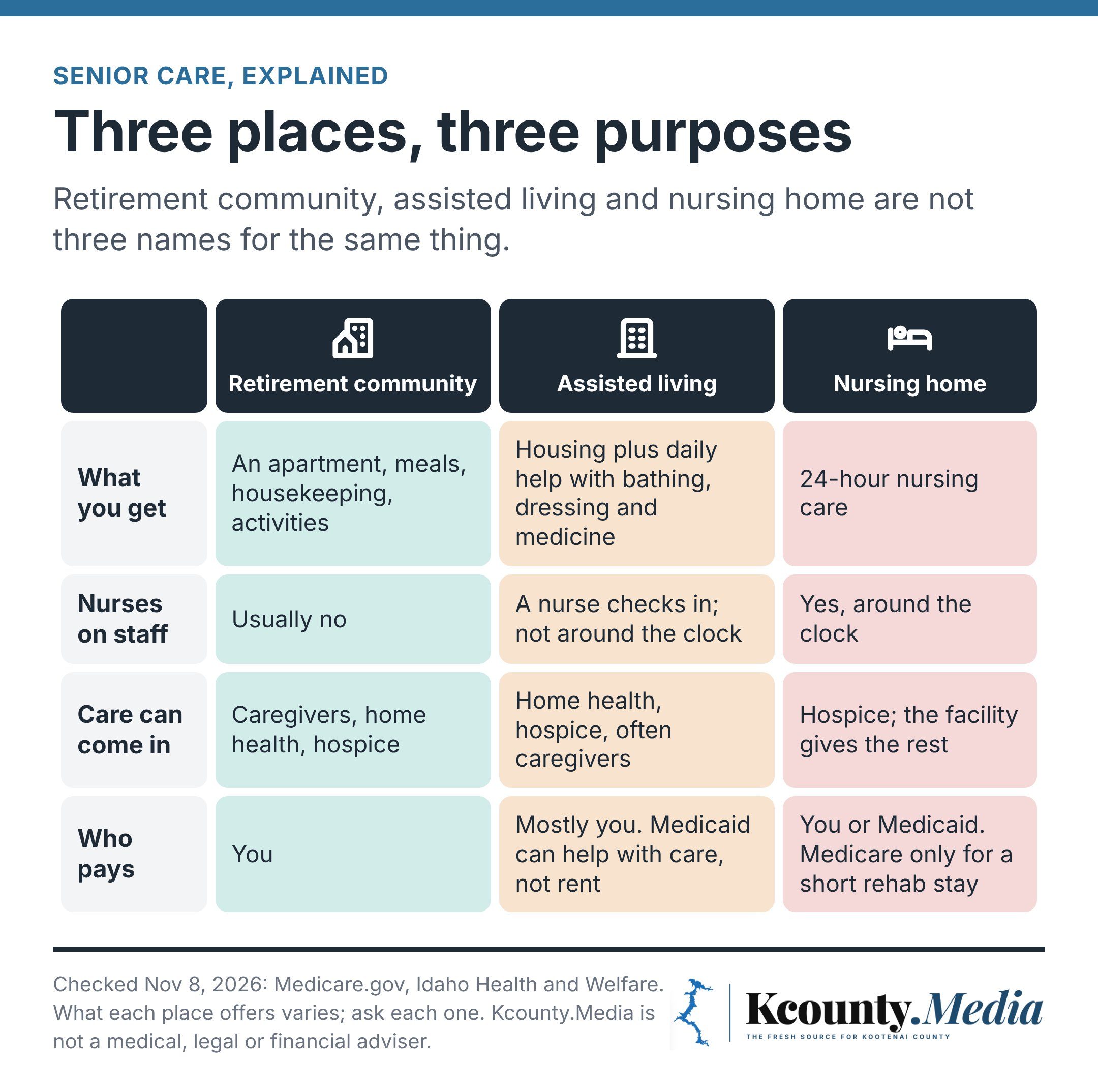
Retirement community
A retirement community, also called independent living, is housing for older adults who can mostly take care of themselves. Most offer meals, housekeeping, activities, a manager on site and often an emergency call system. There usually are no nurses on staff.
Here is what many people do not know: you can live your life out in a retirement community. Care can come in. A caregiver, home health and hospice can all serve someone there. A resident can die peacefully at home in a retirement community on hospice.
The catch is money. Medicare and Medicaid do not pay the rent, and a caregiver costs extra. When someone needs more daily help than they can pay a caregiver for, assisted living may become the next step.
Assisted living
Assisted living is housing plus daily help: bathing, dressing, medicine, meals. In Idaho these are licensed as residential assisted living facilities by the Department of Health and Welfare. A nurse oversees care, but nursing is not around the clock. Some have a locked memory care unit for people with dementia.
Home health and hospice can both come into assisted living. Many residents also have a private caregiver if the facility allows it.
Most assisted living is paid by the resident. Idaho Medicaid can help pay for the care part through its Aged and Disabled waiver, for people who qualify, but it never pays the rent.
Nursing home
A nursing home, also called a skilled nursing facility, gives 24-hour nursing care. People live there for two very different reasons: a short rehab stay after a hospital visit, or long-term care to live in.
Medicare pays for the short rehab stay, for a limited number of days. Medicare does not pay for living in a nursing home long-term. That is paid by the family or by Medicaid. Hospice can come into a nursing home; home health does not, because the nursing home already gives skilled care.
Ask every place
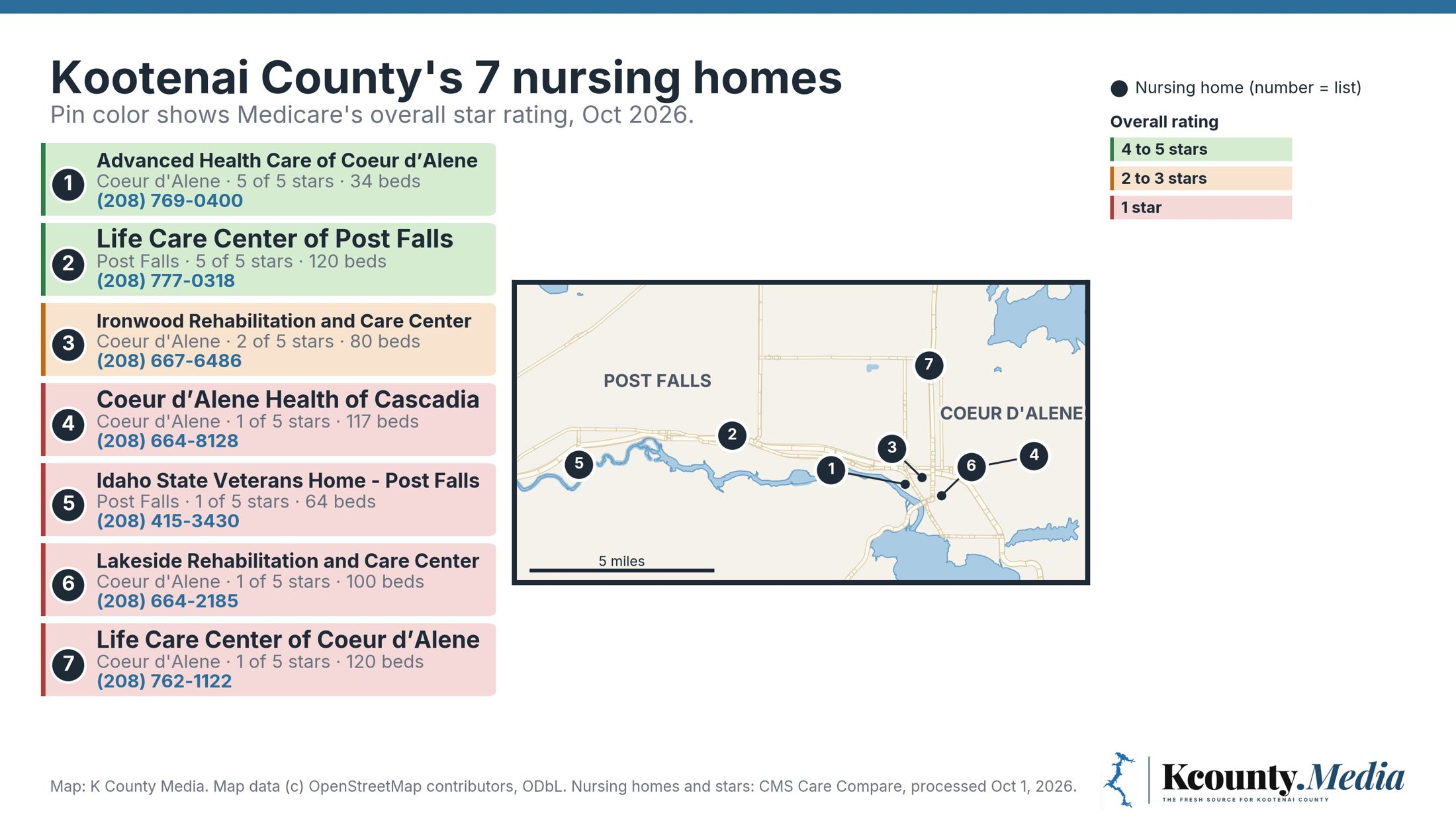
What each place includes varies, so ask. What care is included in the price? What costs extra? Do you allow outside caregivers? What happens if care needs grow? Do you accept Medicaid? For assisted living, Idaho Health and Welfare posts inspection findings online. For nursing homes, check Medicare.gov Care Compare.
Part of Kcounty.Media’s series on senior care in Kootenai County. Every number was checked against Medicare, Idaho or VA sources on Nov. 8, 2026. Rules change, and Medicare Advantage plans can work differently; when in doubt, call SHIBA at 800-247-4422 for free Medicare help.
The writer has worked in hospice, assisted living, skilled nursing and a retirement home, and was once marketing director for two for-profit hospices in the region.
Sources
- IDAPA 16.03.22: Idaho residential assisted living facility rules
- Medicare.gov: Skilled nursing facility care
- Idaho Health and Welfare: Medicaid for elderly or disabled adults
- Medicare.gov Care Compare
- CMS Provider Data: Nursing home provider information (processed Oct 1, 2026)