
Home care is not home health. Here is the difference, and who pays
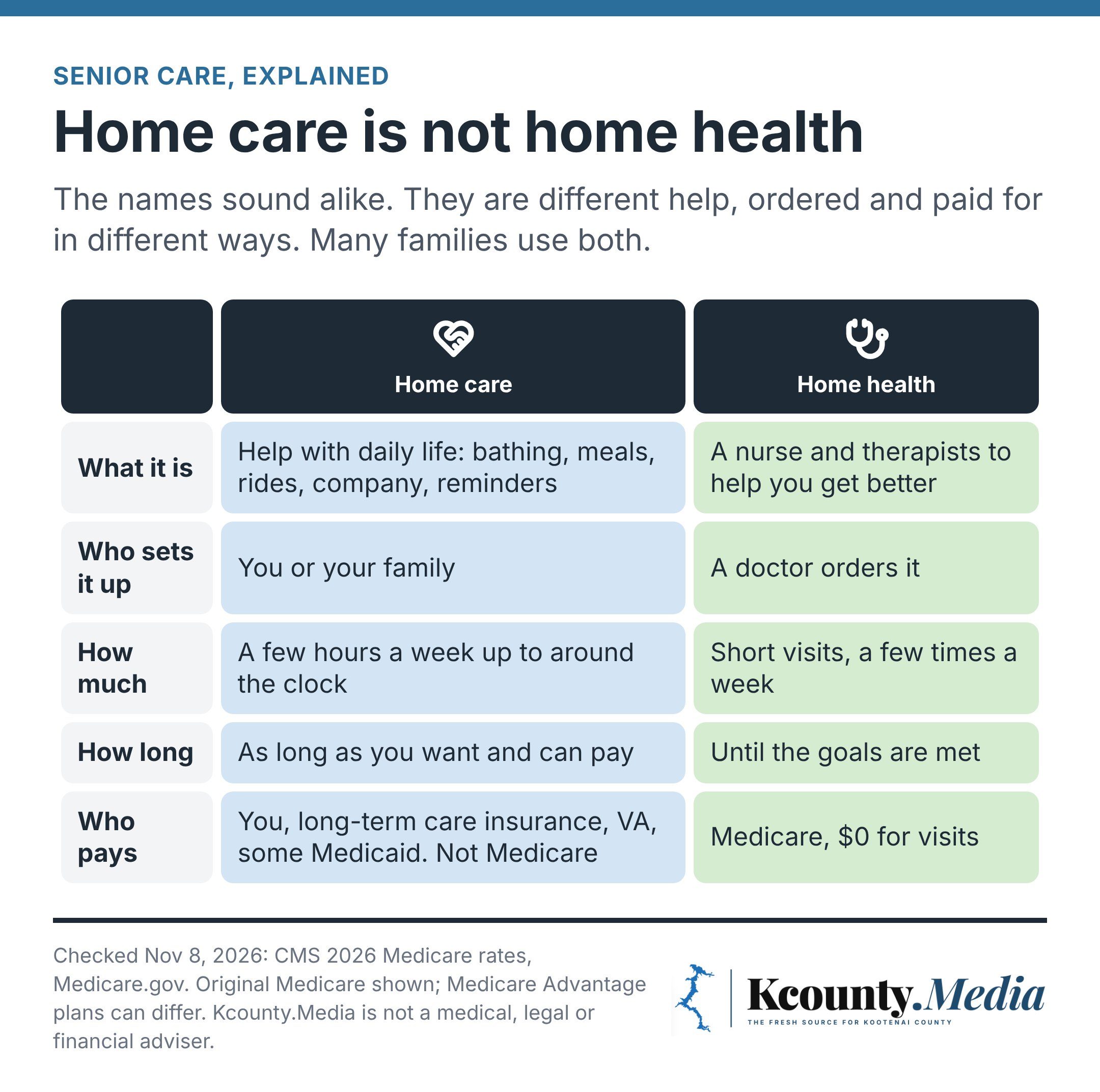
A caregiver helps with daily life. Home health helps someone get better. The names sound alike, but they are ordered and paid for in different ways.
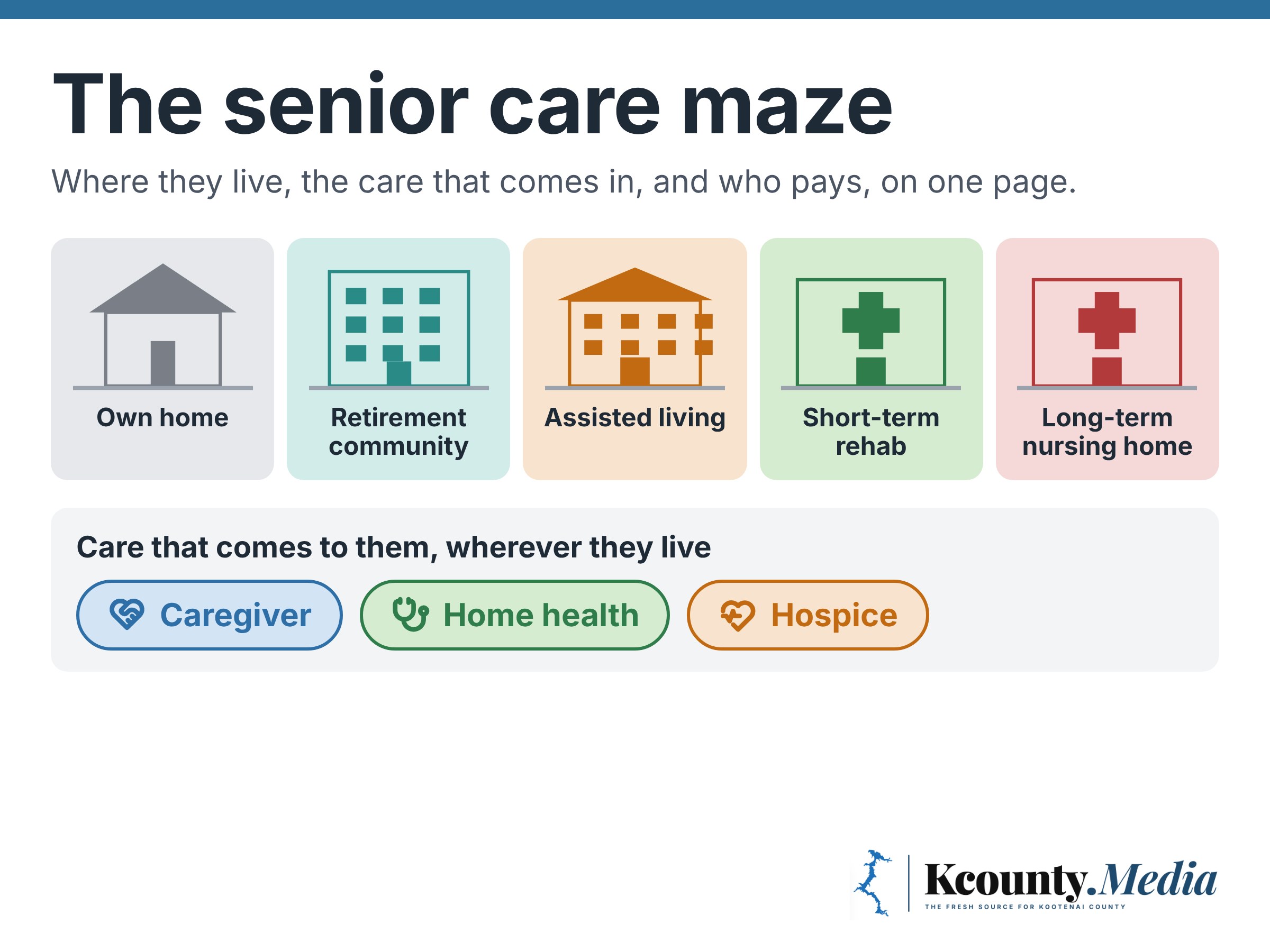
Ask ten families what “home care” means and you will get ten answers. Here is the plain version. Home care is a caregiver: someone who helps with daily life. Bathing, dressing, meals, rides to appointments, medicine reminders, light housework and company.
Home health is medical: a nurse and therapists ordered by a doctor to help someone recover. The two are often confused, and that confusion costs families money and time.
Who pays for a caregiver
Medicare does not pay for a caregiver. That surprises a lot of people. Caregivers are paid for by the family, by long-term care insurance if someone bought a policy, by the VA for some veterans, and in some cases by Idaho Medicaid for people who meet its income, savings and care-need rules.
A caregiver can come almost anywhere
A caregiver can work in a person’s own home, in a retirement community and, usually, in assisted living. In a nursing home or rehab stay, a private caregiver can often sit with someone as a companion if the facility allows it. Some families hire a caregiver for a few hours a week. Others need someone around the clock.
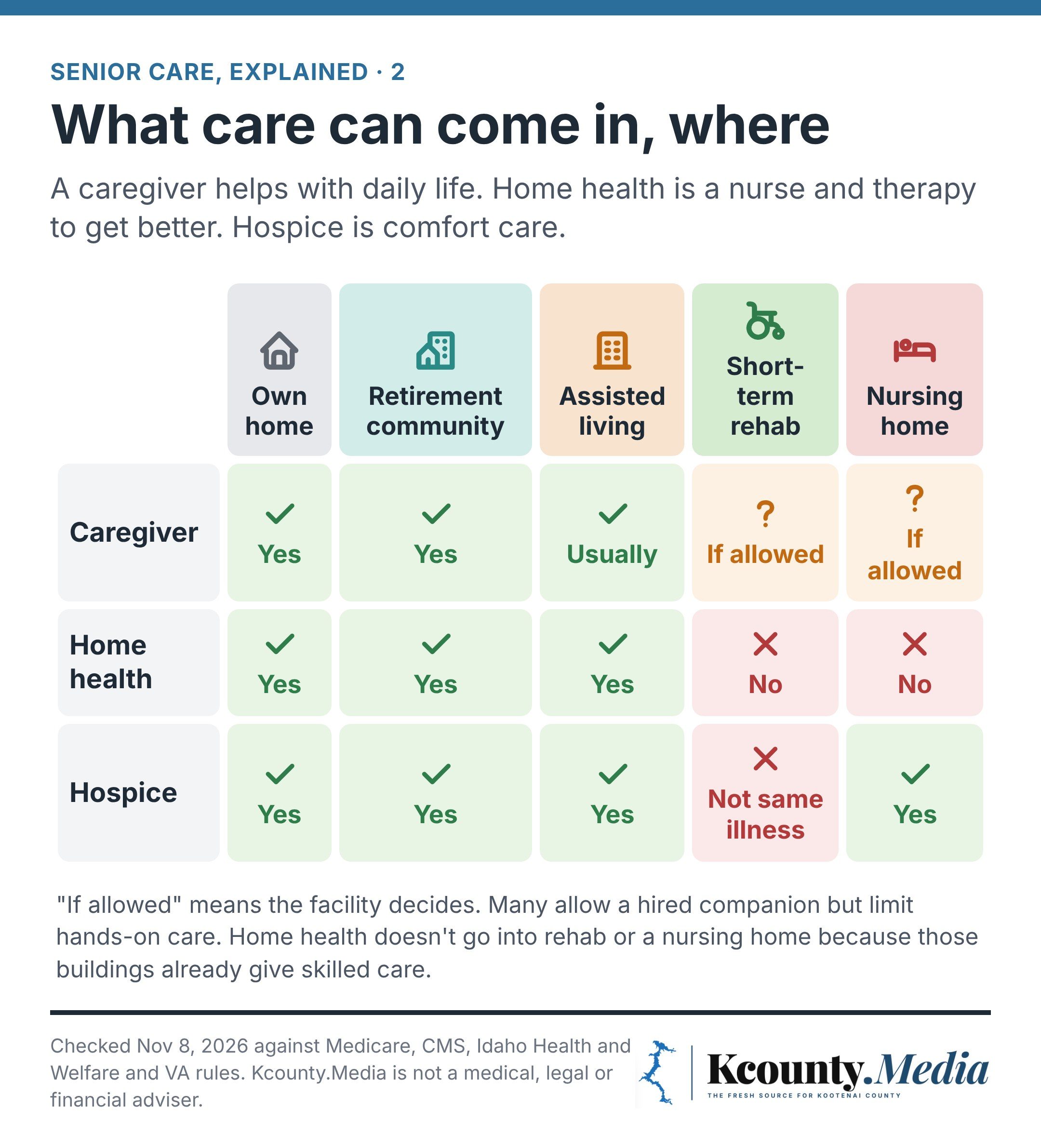
Caregivers can also work alongside home health and hospice. A caregiver plus home health is common after a hospital stay. A caregiver plus hospice is common at the end of life, because hospice visits but does not stay all day.
Agency, or hire your own?
An agency handles background checks, training, payroll and finding a fill-in when the caregiver is sick. Hiring someone directly can cost less per hour, but it can make the family an employer, with tax and insurance rules to follow. Ask any agency how it screens caregivers and who covers a shift when someone calls in sick.
Daytime only
If the family caregiver works days, an adult day program can give care and company during the day. The Area Agency on Aging of North Idaho, at 208-667-3179, can tell you what is available locally and about caregiver support programs.
Part of Kcounty.Media’s series on senior care in Kootenai County. Every number was checked against Medicare, Idaho or VA sources on Nov. 8, 2026. Rules change, and Medicare Advantage plans can work differently; when in doubt, call SHIBA at 800-247-4422 for free Medicare help.
The writer has worked in hospice, assisted living, skilled nursing and a retirement home, and was once marketing director for two for-profit hospices in the region.
Sources
- Medicare.gov: Home health services
- Idaho Health and Welfare: Medicaid for elderly or disabled adults
- VA: Aid and Attendance benefits and Housebound allowance
- Area Agency on Aging of North Idaho